Digital marketing is changing faster than ever. AI is reshaping how businesses create and personalize content, search behavior is becoming more conversational, and customers increasingly expect relevant experiences across multiple channels.
That makes understanding the digital marketing trends 2026 especially important for businesses that want to remain visible and competitive. But following every new platform or technology isn’t the answer. The real challenge is knowing which changes are likely to have a meaningful impact on customer experience, visibility, and business growth.
So, what should businesses pay attention to? Let’s explore the strategies that are likely to matter most in digital marketing 2026.
Why Digital Marketing Is Changing in 2026
Customer journeys are no longer linear. A potential customer might discover a brand through social media, search for reviews, visit its website, watch a video, and return days later before making a decision.
At the same time, AI is making personalization, automation, and data analysis more accessible. Recent 2026 marketing guidance from Mailchimp highlights AI-powered personalization, connected customer journeys, automation, and advanced analytics as important parts of modern marketing strategies.
This means businesses need to think beyond individual channels and build connected experiences around what customers actually need.
7 Digital Marketing Trends That Will Actually Matter in 2026
1. AI-Powered Marketing Becomes More Strategic
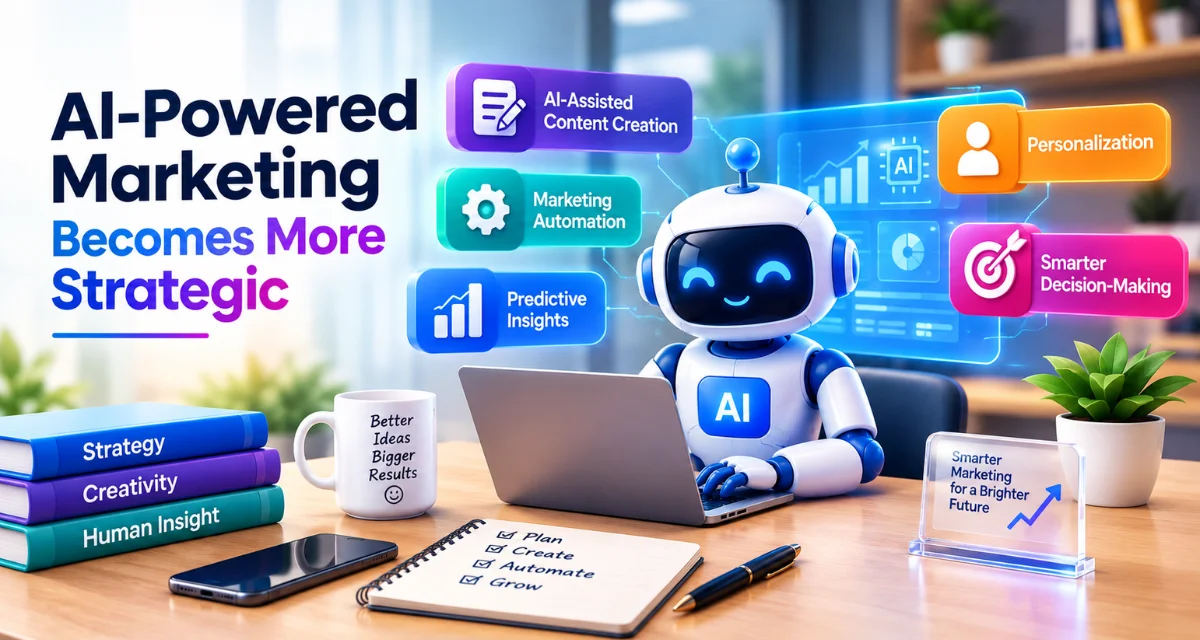
AI is no longer simply a tool for generating blog posts or social media captions. Businesses are increasingly using AI to analyze customer behavior, segment audiences, personalize communication, and automate repetitive marketing activities.
This is one of the most important digital marketing trends 2026 because the competitive advantage won’t come from simply using AI. It will come from knowing where AI can improve efficiency without sacrificing originality or human judgment.
For example, AI can help marketers identify audience patterns or suggest personalized messaging, while human marketers remain responsible for strategy, creativity, accuracy, and brand voice. AI agents are also being used to automate tasks such as audience segmentation, campaign execution, and analysis.
2. Search Is Expanding Beyond Traditional Google Results
Search is becoming more conversational and increasingly influenced by AI. People can discover information through traditional search engines, AI-powered interfaces, social platforms, video platforms, and other digital experiences.
This is changing how businesses should approach SEO. Instead of focusing only on ranking for individual keywords, brands should create content that demonstrates expertise, answers specific questions, and provides genuinely useful information.
The evolution of search is therefore one of the most important trends in digital marketing 2026. Content should be structured clearly enough for both people and search systems to understand.
3. First-Party Data and Privacy-Focused Marketing
Privacy and customer trust will continue to influence marketing decisions. Businesses need to understand what information they collect, why they collect it, and how customers have consented to its use.
First-party data—information customers provide directly through interactions with a business—can help brands create more relevant experiences while developing stronger customer relationships.
The goal isn’t to collect as much data as possible. It’s to collect useful information responsibly and use it to improve the customer experience.
4. Short-Form Video and Social Search Continue to Grow
Social platforms are increasingly becoming discovery channels. People don’t necessarily begin every product or brand search on a traditional search engine.
Short-form video can help businesses answer questions, demonstrate products, explain complex topics, and build familiarity with an audience. This makes video an important component of the digital marketing trends 2026 landscape.
However, successful video marketing isn’t simply about publishing frequently. Content needs a clear purpose, strong storytelling, and a reason for the audience to keep watching.
5. Personalization Becomes a Competitive Advantage
Generic marketing messages are becoming less effective as customers encounter increasingly relevant experiences online.
AI and customer data can help businesses personalize content, recommendations, email communication, and other customer interactions. Current marketing guidance emphasizes using real-time customer data, segmentation, and automation to create more relevant experiences across channels.
For businesses planning their digital marketing 2026 strategy, personalization should not mean making every message different. It means making the right message more relevant to the right audience at the right stage of the customer journey.
6. B2B Marketing Becomes More Buyer-Centric
B2B buyers increasingly research independently before speaking with a sales team. They may read articles, compare alternatives, watch videos, check reviews, and explore a company’s website before requesting a conversation.
That makes b2b digital marketing trends 2026 particularly focused on education and trust.
B2B companies should create content that answers real buyer questions rather than publishing promotional content at every opportunity. Useful guides, case studies, original insights, comparisons, and thought leadership can help a brand become part of the buyer’s research process.
The strongest b2b digital marketing trends 2026 strategies will connect content with the complete customer journey—from initial discovery to evaluation and decision-making.
7. Content Quality Matters More Than Content Volume
AI has made it easier to produce content at scale. But publishing more articles doesn’t automatically create more visibility or authority.
In 2026, businesses should focus on content that adds something valuable: original insights, practical experience, useful examples, expert perspectives, and clear answers to search intent.
This is another major shift within the trends in digital marketing 2026 landscape. Instead of asking, “How much content can we publish?” marketers should ask, “What can we publish that competitors aren’t already saying?”
Content should also be reviewed and updated when information changes. Quality isn’t a one-time task; maintaining useful content is part of a sustainable strategy.
How Businesses Can Adapt to Digital Marketing Trends in 2026
Businesses don’t need to adopt every new technology. A better approach is to connect emerging trends with clear business objectives.
Start by auditing your existing channels and identifying where customers discover, research, and interact with your brand. Then determine which parts of the customer journey need improvement.
Five practical steps can help:
- Understand your audience: Identify their questions, problems, preferences, and buying journey.
- Create useful content: Build content around genuine search intent instead of keywords alone.
- Use AI strategically: Automate repetitive tasks while keeping human oversight for quality and originality.
- Connect your channels: Make your website, social media, email, content, and other touchpoints work together.
- Measure business outcomes: Look beyond impressions and clicks. Track qualified leads, conversions, customer value, and revenue contribution.
If you’re looking for more resources to strengthen your online presence, explore digital marketing expertise. You can also learn more about digital marketing services and how different marketing activities can work together as part of a broader strategy.
What These Trends Mean for B2B Businesses
The b2b digital marketing trends 2026 landscape is moving toward trust, education, personalization, and stronger digital experiences.
B2B companies should make it easier for potential customers to research independently. That means answering important questions before a prospect ever contacts sales.
Thought leadership, educational content, case studies, search-focused resources, and useful social content can all support this process.
The key is consistency. A company that provides useful information across multiple stages of the buying journey has more opportunities to build familiarity and credibility.
Frequently Asked Questions About Digital Marketing Trends 2026
What are the biggest digital marketing trends in 2026?
The biggest trends include strategic AI adoption, AI-influenced search, personalization, first-party data, short-form video, buyer-centric B2B marketing, and a greater emphasis on high-quality content.
How is AI changing digital marketing in 2026?
AI is helping marketers automate repetitive tasks, analyze customer data, personalize experiences, segment audiences, and improve campaign decision-making. Human oversight remains important for strategy, creativity, accuracy, and brand trust.
What are the most important B2B digital marketing trends in 2026?
Important b2b digital marketing trends 2026 include buyer-focused content, thought leadership, personalized communication, search visibility, educational resources, and creating digital experiences that support independent research.
Why is personalization important in digital marketing 2026?
Personalization helps businesses make customer interactions more relevant. By using appropriate customer data and segmentation, brands can tailor content and communication to different needs and stages of the customer journey.
How should businesses prepare for digital marketing trends in 2026?
Businesses should focus on understanding customer behavior, improving content quality, using AI strategically, strengthening first-party data practices, connecting marketing channels, and measuring results against meaningful business objectives.